

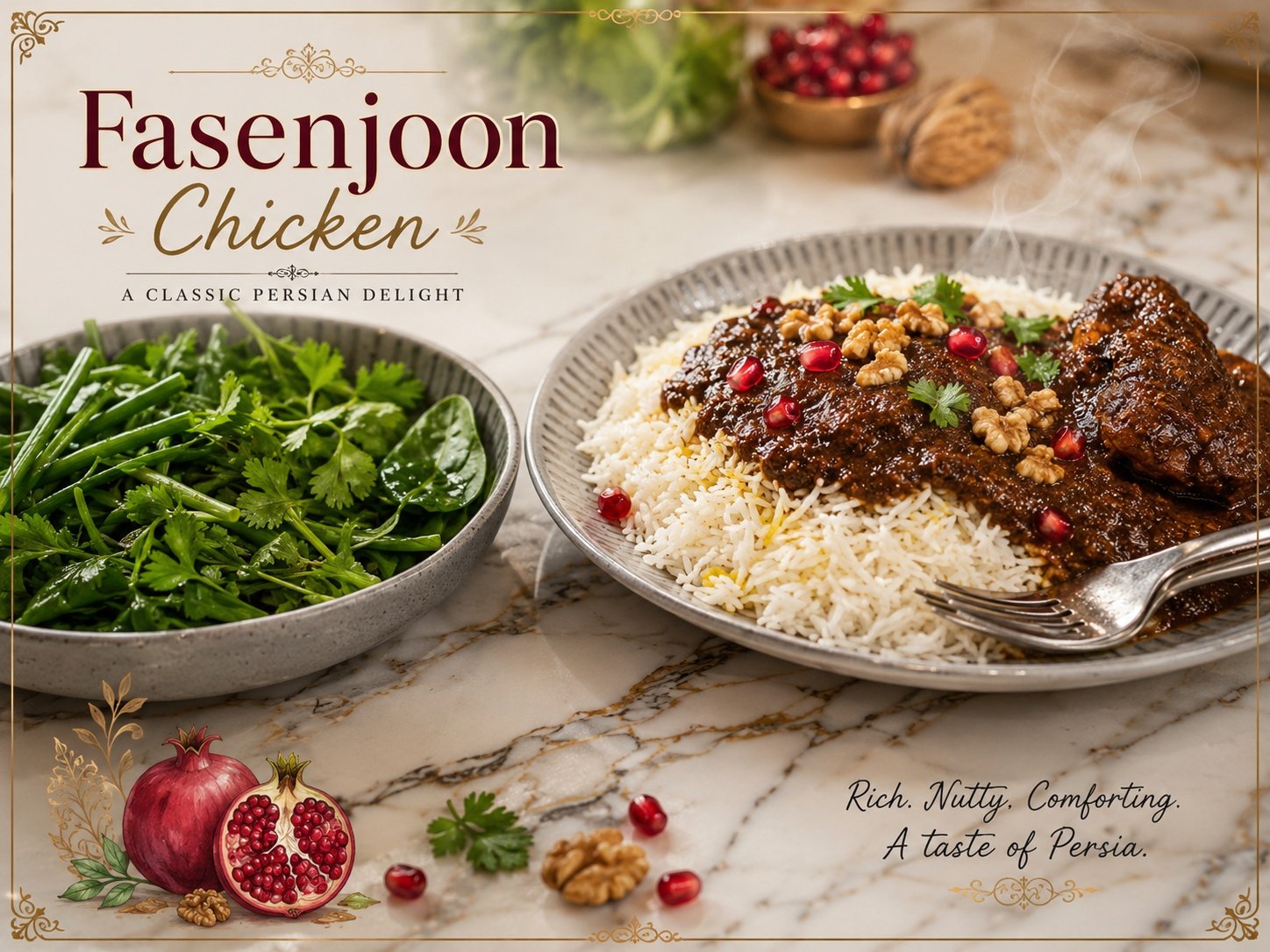
This dish is very personal for us. It is my wife Sara’s favorite dish because it reminds her of her mom. The smell alone already brings back memories for her. When the pomegranate molasses, turmeric, onions, saffron, walnuts, and slow-cooked chicken start mixing in the air, it feels like the whole kitchen changes.
Sara’s mom actually learned this dish when she was young during a vacation in Mazandaran, in Chalus near the Caspian Sea. That makes it even more special, because this is the kind of food that travels with people. You learn it from one place, bring it home, cook it for your family, and years later the smell still reminds someone of their mother.This is Fesenjan, also called Fesenjoon. I am Gilaki, and in Gilan we usually make this with duck, which gives it a deeper, richer flavor because of the fat. I also remember my grandfather making it with goose.
Goose Fesenjan has that old-school, heavy Caspian style richness to it. But honestly, my whole life, goose scared me. They remind me of ravaging wolves of sorts. The way they chase, the way they guard their space, and that honk, wow. That sound alone brings back scary memories. So while goose may make an amazing Fesenjan, I respect them from a distance. May be even fear them.
Sara is Kurdish, and in her family they mostly use chicken. So this version is closer to the way she grew up eating it. It is mainly known as a Gilaki / Daylamite dish from the Caspian side of Iran, but many Iranian families from different regions cook their own version now. Some make it sweeter, some more sour, some darker, some lighter. Some add tomato paste, some do not. For me, I prefer not to use tomato paste because I want the walnut and pomegranate molasses to be the main flavor.
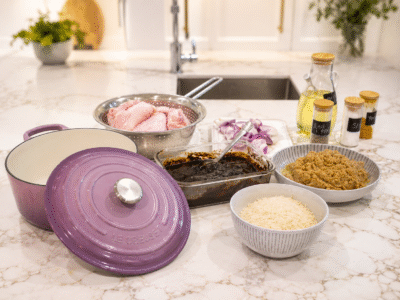
Ingredients:
- 1 kilo chicken, about 2.2 pounds, cut into serving pieces
- 2 large onions, sliced thinly
- 2 cups walnuts, finely ground
- 1/2 cup pomegranate molasses, I used Yamama pomegranate molasses
- 2 to 3 cups water add more as needed while simmering
- 1 teaspoon turmeric
- 1 1/2 teaspoons salt, adjust to taste
- 1/2 teaspoon black pepper
- 1/4 teaspoon saffron threads, bloomed in 2 to 3 tablespoons hot water
- 2 to 3 tablespoons cooking oil. I use canola as it is neutral
- Optional:1 tablespoon tomato paste, but I personally do not use it
- 1 to 2 teaspoons sugar, only if the pomegranate molasses is too sour for your taste
Equipment I use:
- Le Creuset Dutch oven if you want something premium A heavy enameled cast iron pot holds heat very well and spreads it more evenly, which helps when you are cooking something low and slow. Fesenjan can easily stick or burn at the bottom if the heat is too strong or uneven, so having a good heavy pot makes the process much easier. It also looks beautiful enough to serve straight from the pot, which is a nice bonus.

- Lodge Dutch oven if you want something more budget-friendly but still very good
- Tramontina non-stick pan for browning the chicken
- Wooden spoon or silicone spatula
- Small bowl for blooming saffron
- Food Ninja processor or grinder for the walnut, you got to use something that is all in one. this is the one.
- Low fire / slow cooking setup
How I make it:
- First, season the chicken with turmeric, salt, and black pepper. Mix everything well so the chicken is coated properly. I like placing it in the refrigerator for at least 30 minutes so the flavors can meld into the meat. If you have more time, 1 to 2 hours is even better.
- Slice the onions and cook them slowly in oil until golden. I usually prefer white onions because they give a cleaner sweetness, but red onions work too, and that is what I used here. Do not rush this part because the onion gives the base flavor of the dish. Once the onions are golden, place the seasoned chicken on top and brown it gently with the onions. I like using a Tramontina non-stick pan for this part because it helps brown the chicken without sticking too much. You are not trying to fully cook the chicken here. You just want to give it color and let the turmeric, onion, and chicken fat start working together.
- In a separate pot or pan, toast the finely ground walnuts slowly on low heat for around 5 to 8 minutes until they become slightly golden and fragrant. Be careful not to burn them because walnuts can turn bitter fast. This step helps deepen the flavor and gives the sauce that thick, nutty body Fesenjan is known for.
- Add the pomegranate molasses and 2 cups of water to the walnuts. Stir it well until the walnut and molasses start turning into a sauce. The sauce should be rich, dark, and slightly thick, but still loose enough to simmer.If you are using tomato paste, this is where you can add 1 tablespoon. But again, I personally skip it. I prefer the cleaner flavor of pomegranate molasses, walnuts, saffron, turmeric, and chicken.Transfer everything into a Dutch oven if you are using one.
- A Le Creuset Dutch oven is excellent for this because it holds heat evenly and is perfect for slow cooking. Lodge also works very well and gives you that heavy pot cooking style without spending as much.Add the browned chicken and onions into the walnut and pomegranate sauce. Add the bloomed saffron. Stir gently, lower the heat, cover partially, and let it cook slowly.
- This is not a fast dish. Fesenjan needs time. Cook it on low fire for around 3 hours. Stir occasionally so the walnut does not stick to the bottom. Add more water little by little if the sauce gets too thick before the chicken becomes tender.As it cooks, the walnuts release their oil, the sauce darkens, and the chicken becomes soft. The flavor becomes rich, nutty, slightly sour, slightly sweet, and very deep. That slow fire is important.
- You cannot rush this dish.Taste near the end and adjust. Add more salt if needed. If it is too sour, some families add a little sugar, but I usually prefer keeping the pomegranate flavor more natural. If it is too thick, add a bit of water. If it is too thin, let it simmer longer uncovered.
Serve with Persian rice, preferably saffron rice or plain steamed rice. For me, this is more than just chicken with walnut and pomegranate. It connects Gilan, Daylam, Mazandaran, Kurdistan, and family memory in one pot. My Gilaki side may still say duck or goose gives the deepest version, but this chicken version is Sara’s comfort food. It carries the memory of her mom, who learned it in Chalus near the Caspian, and that makes this version special in its own way.