

Hands-on first impressions of the Hessler Gourmet Series, with observations about sharpness, construction, weight and grip. This is an initial review, not a long-term edge-retention test.
Not every kitchen knife needs to be intended for professional cooks. Sometimes, a dependable knife with reasonable sharpness and comfortable handling is enough for everyday meal preparation. The Hessler Gourmet Knife Set takes that approach, at least based on my initial experience.
I’ve worked with larger, more substantial kitchen knives, including models from Tojiro, Victorinox Fibrox and Mercer. That experience affects what I look for. The Hessler is noticeably lighter and smaller than what I’m accustomed to, but I don’t think that automatically makes it a bad set. It simply seems designed with a different user in mind.
Photos in this review link to the Hessler Amazon listing (affiliate links). Original hands-on images are shown without AI alterations.

First impressions: what does “surgical stainless steel” mean?
One of the first things that catches your eye is the large “surgical stainless steel” claim on the packaging. It sounds impressive, but it’s not enough information to judge a kitchen knife’s performance. I’d rather know the exact steel grade, heat treatment and hardness—details the phrase alone doesn’t provide.
These are nice-looking knives, with an all-metal appearance and a consistent design across the set. But looks won’t tell us how long the edges will stay sharp or how well the steel will resist corrosion over time.
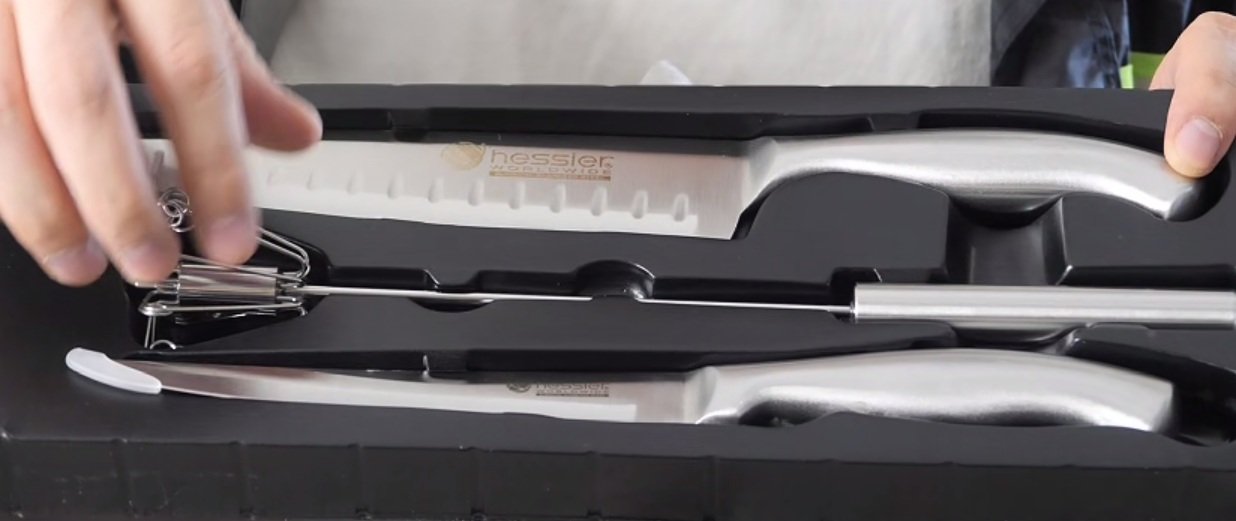
The chef’s knife: compact, light and sharp out of the box
The chef’s knife is smaller than the knives I normally use. The blade is also relatively thin and lacks the substantial feel I get from my preferred kitchen knives. I noticed that as soon as I handled it.
That said, it was sharp straight out of the box. During my initial demonstrations, I used the larger knife for cutting fruit, while the smaller knife worked on peeling dragon fruit. They’re useful first impressions, although they don’t tell us much about long-term edge retention.
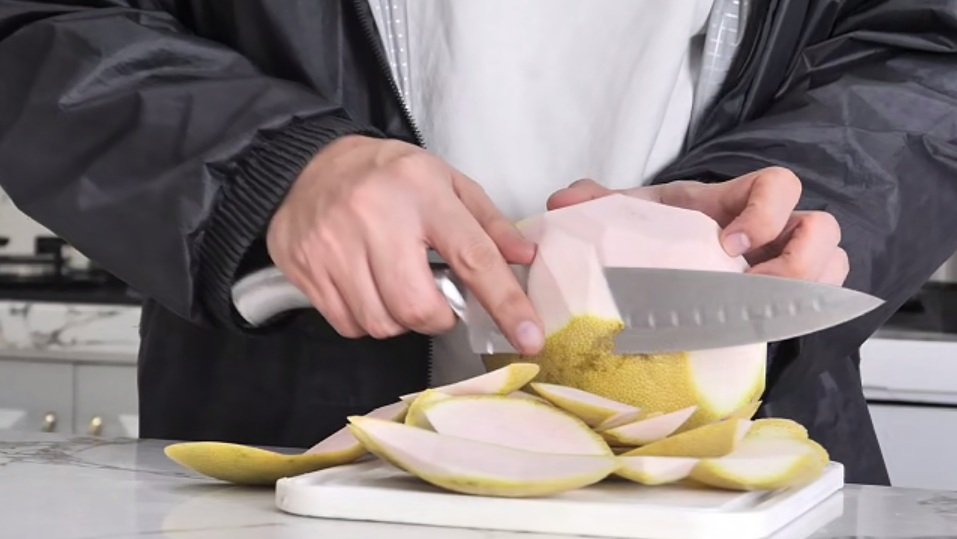
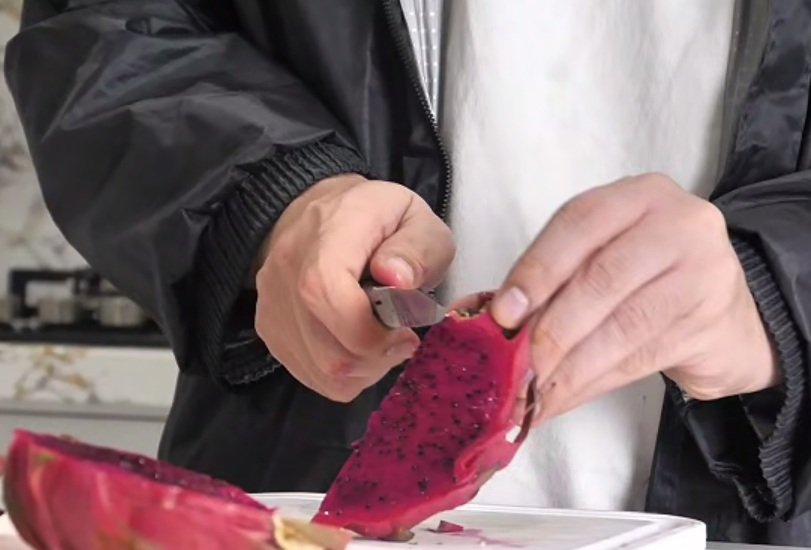
Blade thickness isn’t a straightforward quality score. A thinner blade can move through certain ingredients with less resistance, while a thicker one may feel more robust. The grind, edge geometry and overall balance also matter. My reservation here is primarily about what feels comfortable and familiar to me—not a claim that thicker knives are always better.
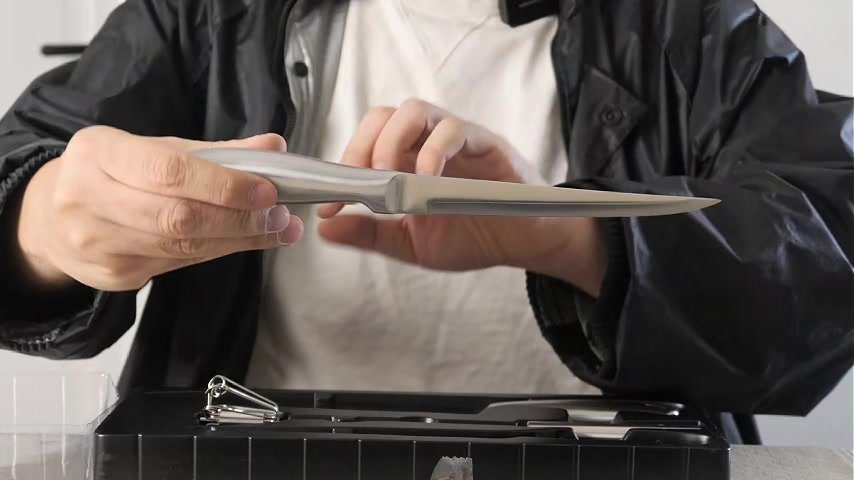
Stainless steel handles: attractive, but a concern when wet
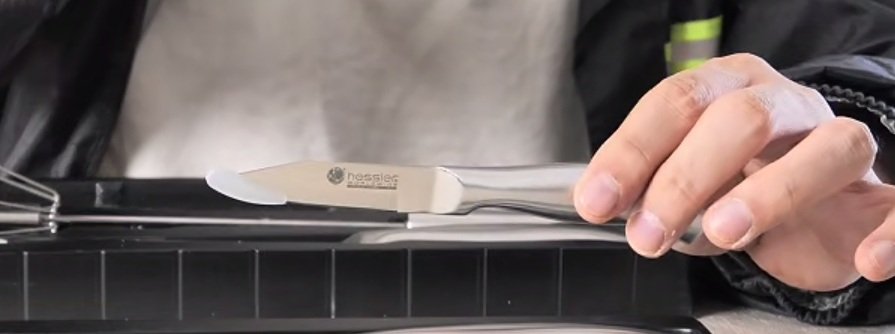
The all-metal handles give the Hessler knives a clean appearance. There are no conventional wooden or plastic handle scales visible on these knives. I like the simplicity, but the smooth finish is also my biggest concern.
The handles can feel less secure when wet or greasy. In actual kitchen work, you will be washing ingredients, handling slippery foods and moving between different tasks. I prefer a more confident grip, especially on a sharp knife.
The handles also feel somewhat small for my hands. I have large hands, and I don’t get the same substantial grip I get from some of my regular knives. People with smaller hands may have a different experience, so this is very much a matter of fit.
As for full-tang construction: a full tang means the blade steel extends through the handle. The integrated stainless appearance doesn’t by itself prove the exact internal construction, so I won’t make a definitive claim without checking it more closely.
Lighter than I’m accustomed to—but that’s not necessarily bad
Every knife I handled in this set felt lighter than the professional kitchen knives I’m accustomed to. Some cooks like a heavier, more planted knife; others prefer something light and easy to move. Neither preference automatically makes a knife better.
For ordinary home cooking—cutting fruit, vegetables, or preparing smaller meals—the Hessler’s modest weight could be appealing. My personal preference is for something with a larger handle and a little more presence in the hand. That doesn’t mean somebody cooking dinner for a family needs to share my preference.
What about the indentations along the blade?
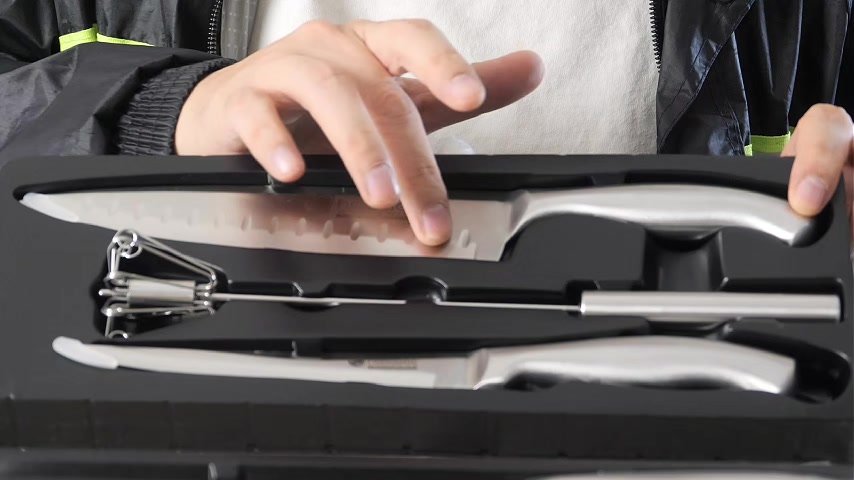
The larger knife has small hollow-edge or Granton-style scallops along the side of the blade. These are intended to help reduce contact and sticking when slicing some foods. They’re not serrations, and they don’t automatically make a knife sharper. I’ll need to compare how different foods release from the blade before calling them an advantage here.
Hessler vs. Tojiro, Victorinox Fibrox and Mercer
In terms of how it feels to use, I wouldn’t put the Hessler in the same category as the Tojiro, Victorinox Fibrox or Mercer knives I’m familiar with. Those give me a different sense of grip, dimensions, balance and construction.
That is not a laboratory comparison of steel composition or hardness, and those brands each make multiple knife models. I’m describing my own preferences after handling them in the kitchen.
For someone who mainly prepares food at home, the Hessler may still be sufficient. Not every cook needs a professional knife, and not every professional’s favorite knife will be the most comfortable choice for someone else.
What I still need to test
- Edge retention: Does the initial sharpness last after repeated preparation?
- Sharpening: How straightforward is it to restore a dulled edge?
- Grip: How secure does the handle feel during longer sessions, while keeping hands dry and safe?
- Corrosion: Does the steel show discoloration after repeated cleaning and drying?
- Food release: Do the blade scallops make a noticeable difference with sticky ingredients?
I’ll also pay attention to how the smaller knives handle more detailed trimming and peeling. Initial cutting demonstrations are helpful, but they’re not a substitute for using a knife repeatedly over time.
Pros and cons
What I like: The knives arrived sharp, the set has an attractive matching stainless steel appearance, and the lightweight construction may be convenient for home cooks who prefer smaller tools.
My reservations: The chef’s knife is smaller and thinner than I’m accustomed to, the handles are undersized for my hands, and the smooth metal grip calls for extra caution when moisture or grease is involved. I’m also not persuaded by the vague “surgical steel” marketing without an actual alloy specification.
Where to buy: Hessler and the knives I mentioned
If you’re comparing the Hessler with other kitchen knives, these are the product listings I referenced. Check the model, contents, seller and availability before ordering.
- Hessler Gourmet Knife Set: Check on Amazon
- Tojiro: Check on Amazon
- Victorinox Fibrox: Check on Amazon
- Mercer Renaissance: Check on Amazon
Affiliate disclosure: Some links in this article are affiliate links. If you make a qualifying purchase through them, PulseNPicks may earn a commission at no additional cost to you. This helps support our reviews and animal rescue efforts.
Initial verdict: better suited to home cooking
The Hessler Gourmet Series isn’t necessarily a bad knife set. It arrived sharp, it looks presentable and it’s easy to imagine it serving an ordinary home kitchen. However, it isn’t what I’d choose over my preferred Tojiro, Fibrox or Mercer knives for longer, more demanding preparation work.
My reservations are mostly about size, blade feel and the grip, not a claim that every home cook will dislike them. I’ll hold off on a numerical rating until I’ve tested durability and edge retention over a longer period.