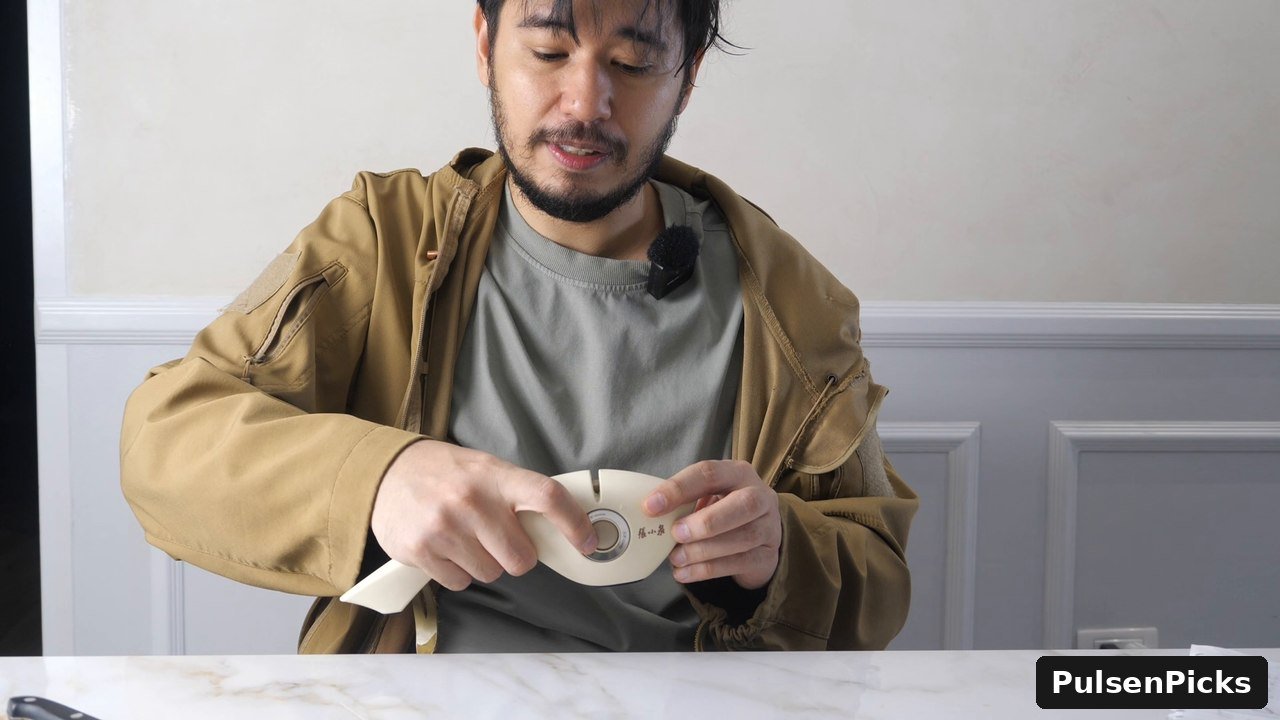

Rating: 4.0/5 — 3.5/5 for what I could establish from this first test, plus another 0.5 for value.
Affiliate disclosure: This review contains an Amazon affiliate link. I may earn a small commission from qualifying purchases at no additional cost to you. My opinions and test footage are my own.
Man, this thing is cheap. I had already seen something that looked remarkably similar on a big influencer’s page and YouTube channel, but under another name. Rebadged? Rebranded? It certainly made me curious. I cannot verify that the two products have the same manufacturer or internals, so I will stick to the sharpener I actually bought and used.
The Amazon listing calls it the ZHANG XIAO QUAN SINCE 1628 3-Stage Manual Kitchen Knife Sharpener, a small cream-coloured pull-through unit sold as a diamond and ceramic sharpener. The listing shown when I checked was US$9.49, with shipping to the Philippines listed separately. At that price, the question is not whether it can replace a good sharpening stone. The question is much simpler: does it actually sharpen a kitchen knife?


Opening it up and handling the sharpener
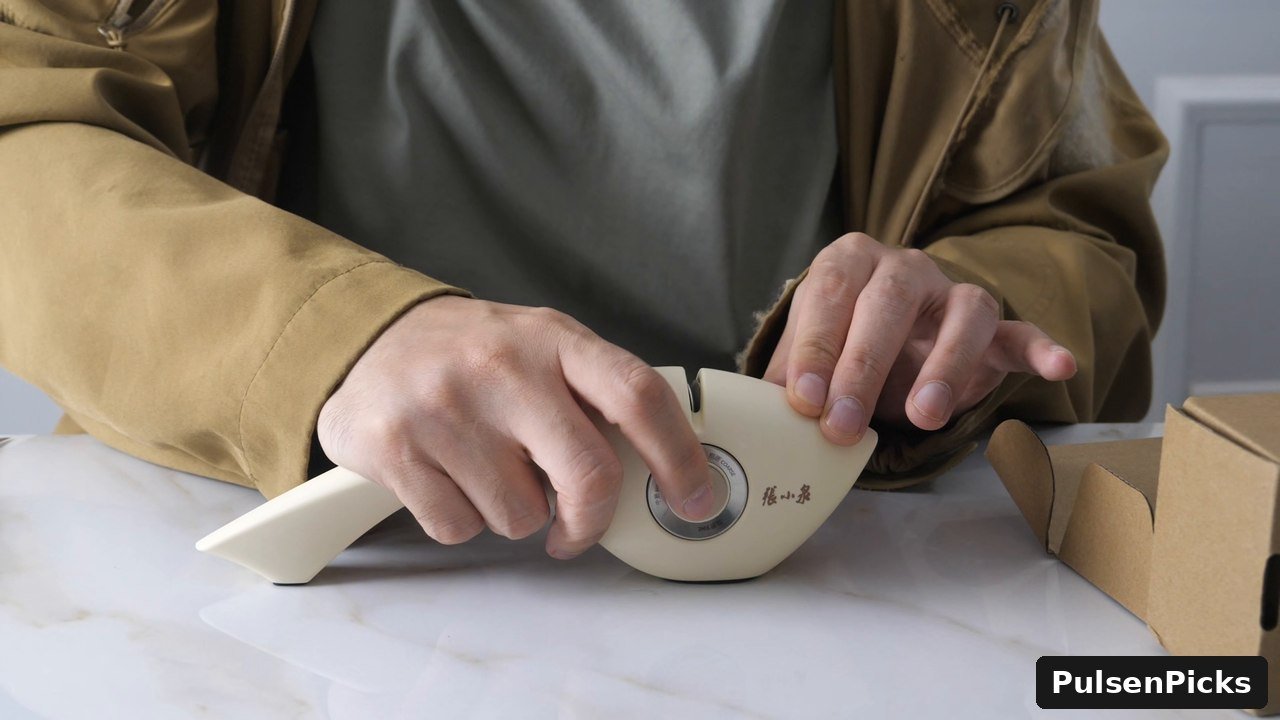
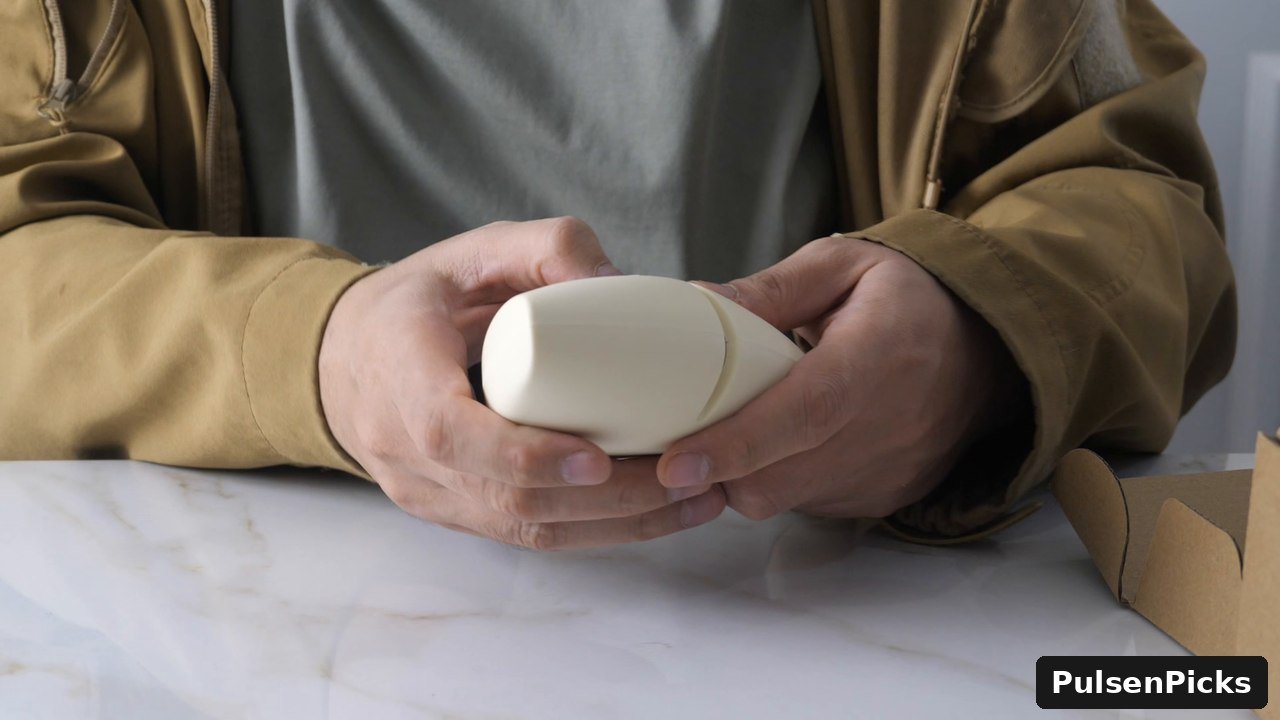
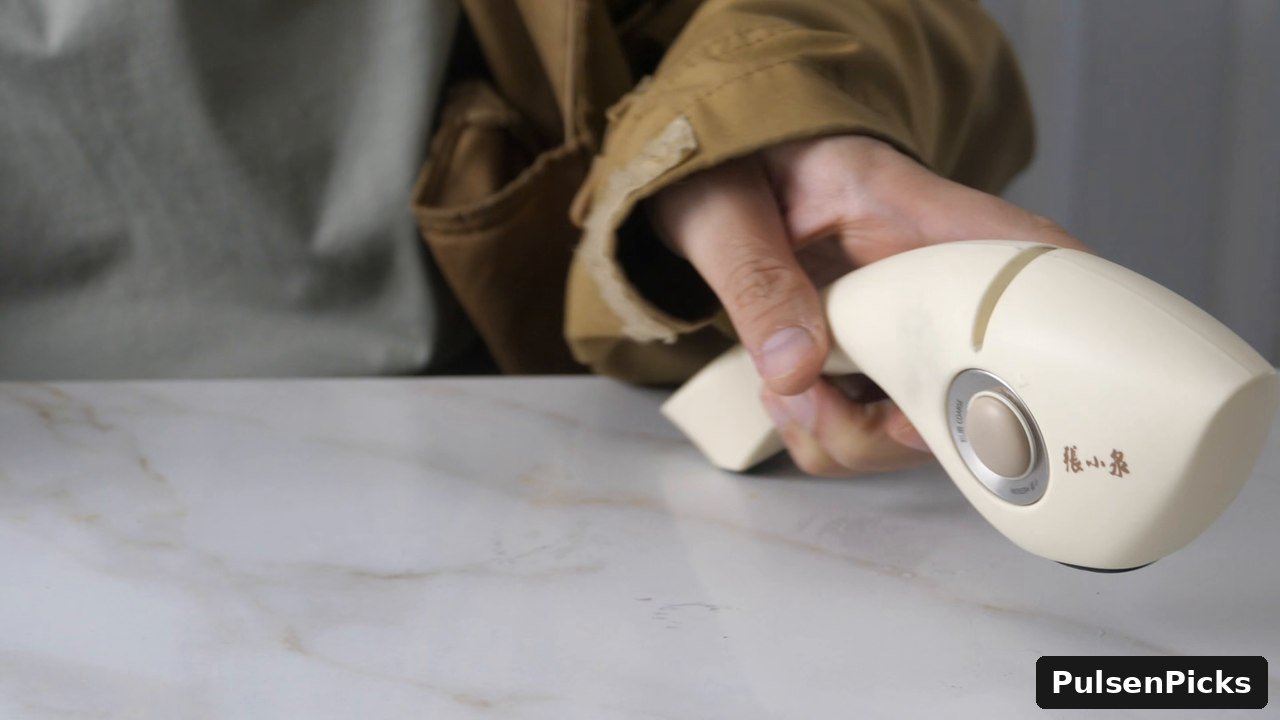
It is an unusual-looking little thing. I like the curved shape and the ring on the side, and it is easy enough to set on the counter and use. The Amazon description advertises an ergonomic grip and a nonslip base. Those are seller claims; I am not treating them as laboratory-tested specifications.
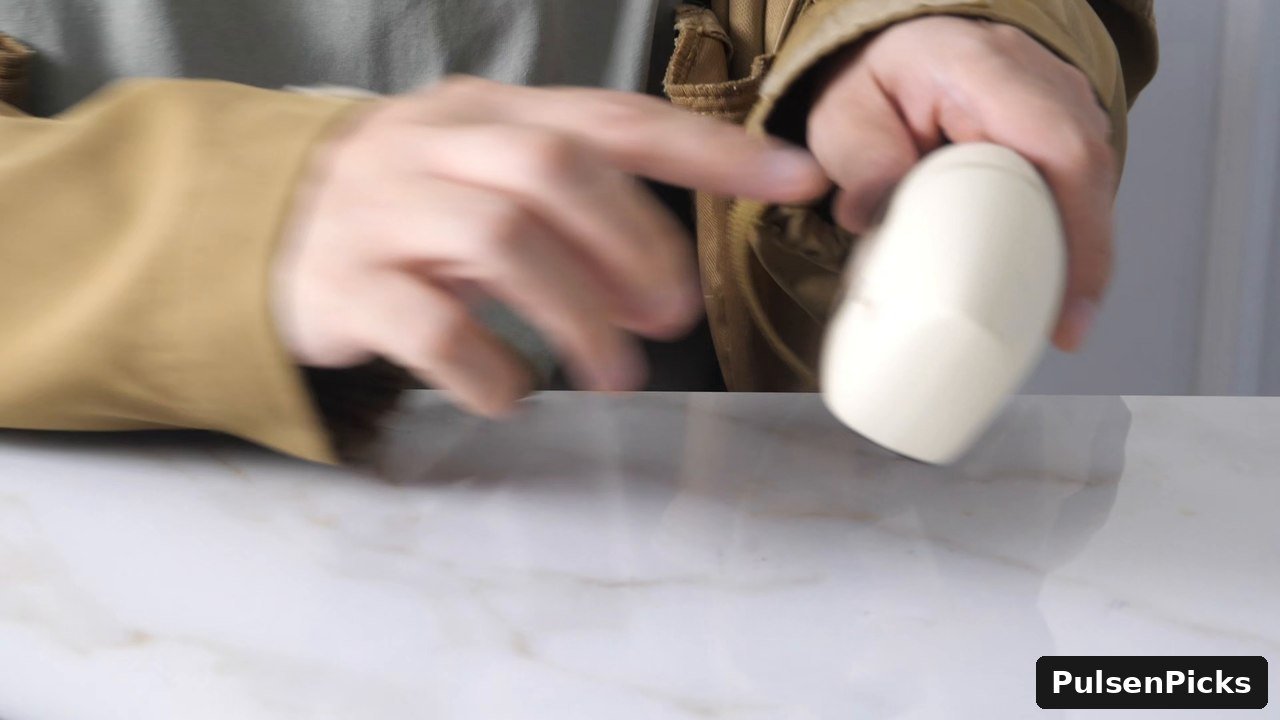
The pale finish is both part of its appeal and one of my first complaints. This thing gets dirty fast. You can see the dark metal residue from sharpening collecting against the light body. It makes the sharpener look used almost immediately. The good news is that the residue I noticed could be cleaned off easily. It is a cosmetic annoyance, but a very visible one.
Does the three-stage system work?
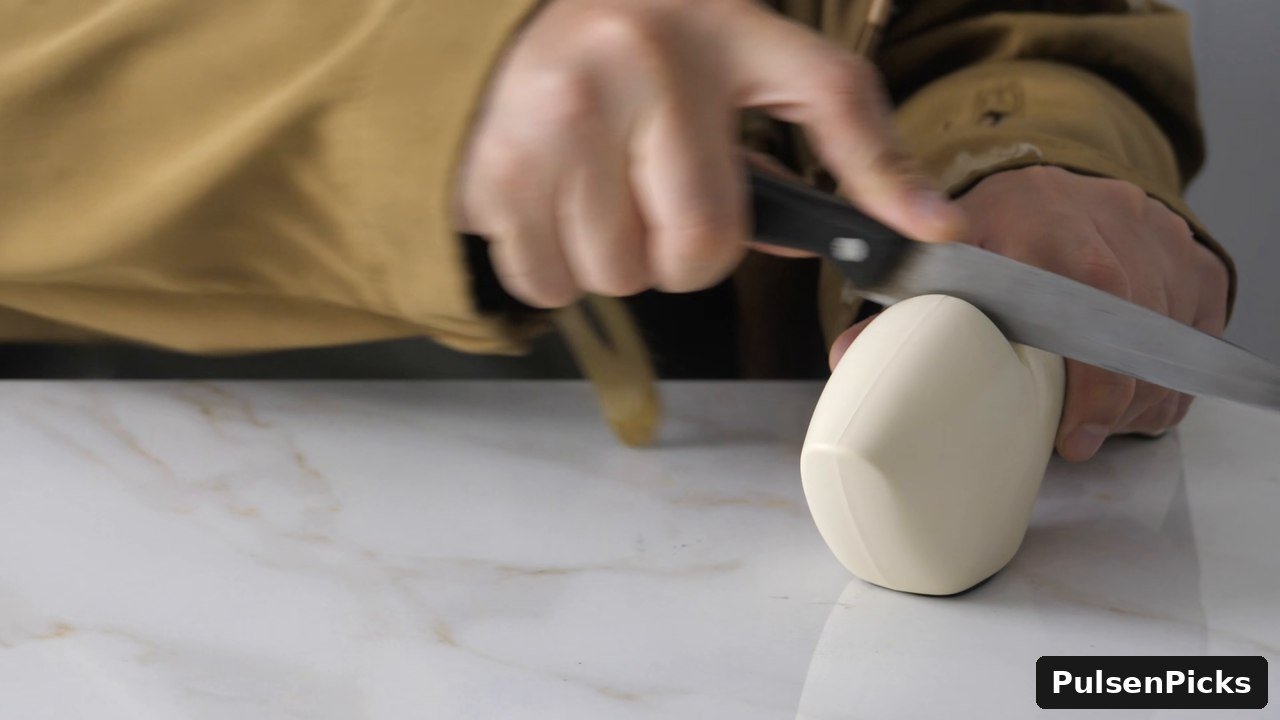
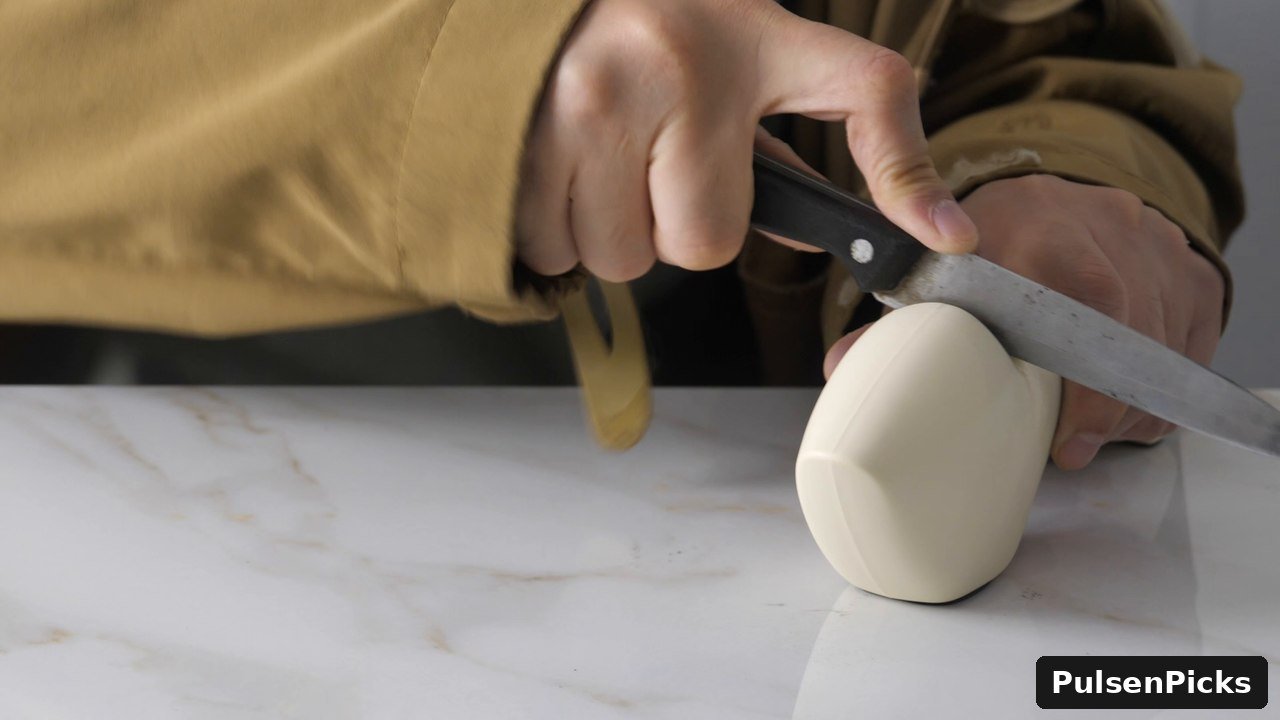
In the video I put a kitchen knife through the sharpener and then tried cutting a sheet of paper. And yes, it did work and it did sharpen. But to what extent, though? That is where I would be careful with the praise.
The Amazon listing describes three functions: blade repair, restoring an edge and polishing. This broadly matches the idea behind a multi-stage pull-through system: a more aggressive stage shapes an edge, while finer abrasive stages refine it. The listing describes diamond and ceramic abrasives, but I have not independently verified the exact abrasive in each slot, the grit, or the sharpening angle.
The paper test gives us an immediate, visible check that a knife can bite and cut after sharpening. What it does not tell us on its own is the exact cutting-edge angle, how much blade steel came off, or whether the edge will still perform after weeks of chopping. I would need a consistent before-and-after test and a longer period of kitchen use to answer those questions properly.
The biggest trade-off: convenience versus blade care
Here is something worth knowing before buying one of these. Pull-through sharpeners are fast and easy because their slots guide the blade for you. However, a more aggressive sharpening stage can remove real metal, and a fixed-angle system may not be suitable for every knife. That is especially relevant if you own expensive, very thin, single-bevel or unusually hard kitchen knives. For those, a correctly used whetstone or an appropriate guided system gives you more control.
My suggestion is to use the coarse or repair stage only when the blade genuinely needs it, use gentle and consistent passes, and follow the specific instructions supplied with your model. Keep fingers out of the path of the blade. After sharpening, wipe the knife thoroughly to remove filings before it touches food. For the cream-coloured sharpener body, wipe the residue away and dry the unit rather than assuming the whole mechanism can be soaked.
For a regular inexpensive kitchen knife that you simply want to put back to work, though, the convenience is the whole attraction. You do not have to set up a sharpening station every time the edge feels tired.
What I liked and what I did not
The good: the purchase price is very low, the compact shape takes up little room, and my first test demonstrated actual sharpening rather than just a pretty product claim. For an ordinary household knife, this is an accessible way to get a working edge.
The bad: the light-coloured body shows dark sharpening residue quickly, the seller’s abrasive details are not independently confirmed, and the first paper test is not enough to prove a durable or precisely finished edge. I would not casually put my best Japanese or carbon-steel knives through an aggressive slot.
There is also a catch for buyers in the Philippines: the screenshot showed US$10.98 shipping in addition to the US$9.49 item price. The sharpener itself is cheap, but international shipping can change the value equation. Check the full checkout total, not just the bold price on the listing.

My rating: 4.0 out of 5
Sharpening and first impressions: 3.5/5. It sharpened the knife in my video, and that deserves credit. But I am not giving it a near-perfect performance score on a single demonstration when edge retention and blade wear remain unanswered.
Value bonus: +0.5. I am adding half a point because the tool itself costs so little. That bonus assumes you can buy it without paying disproportionate delivery charges.
Final score: 4.0/5. If you need to revive ordinary kitchen knives cheaply, this is worth considering. If you care about preserving the geometry of a premium blade, I would take the more controlled approach. Cheap, functional, a bit messy, and still something I want to test over a longer period. That sounds about right.
Check the Zhang Xiaoquan 3-stage knife sharpener on Amazon
References and product information
Product title, advertised diamond/ceramic design, displayed price and shipping: Amazon listing captured October 15, 2026. Background on the brand’s history: Zhang Xiaoquan official company introduction. General background on sharpening angles and abrasive removal: Chef’sChoice sharpening overview. These references provide background, not independent test results for this exact sharpener.